 Trip Well Spent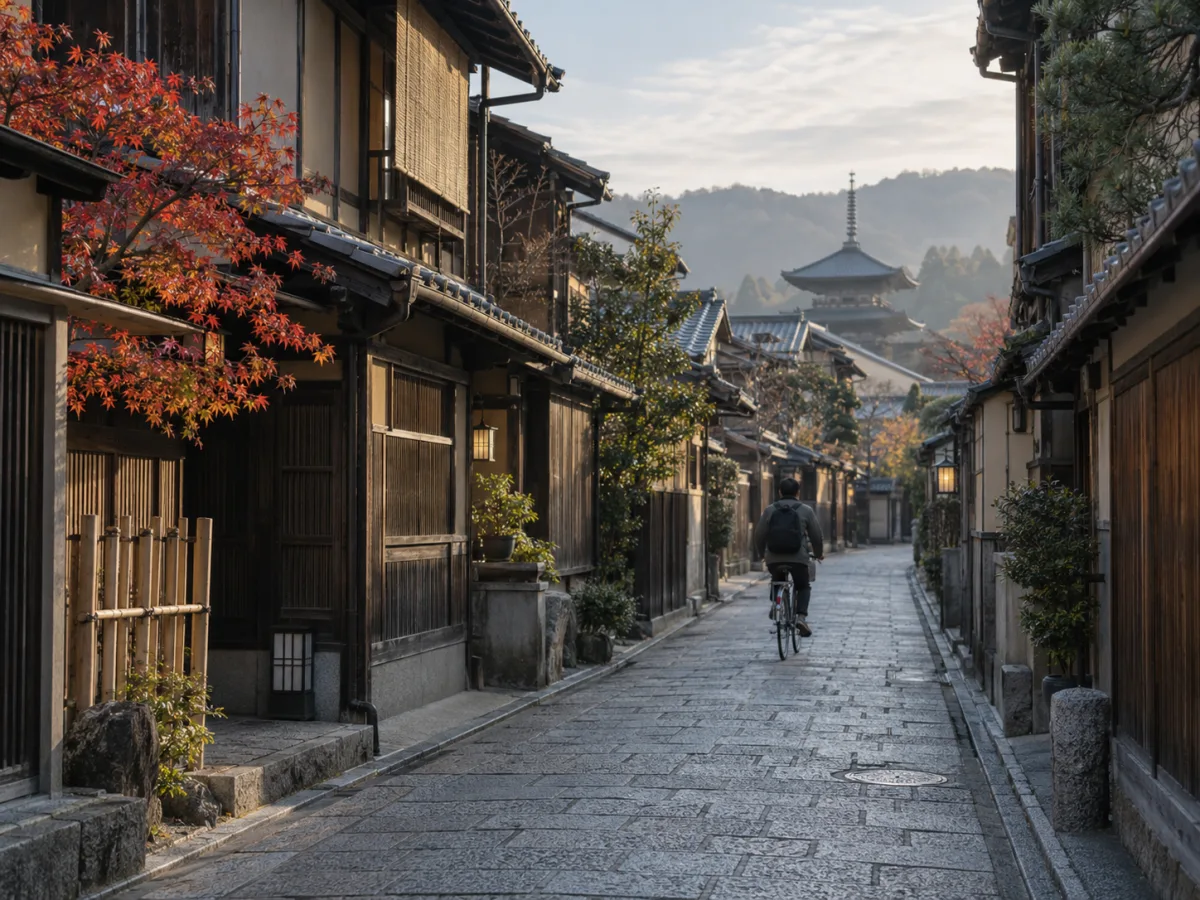
The direct answer
Base in the city that owns most of your mornings and nights.
Kyoto is the better first-Kansai base when the trip contains at least two serious Kyoto sightseeing days. Sleeping there protects the quiet opening hours that make Higashiyama, Fushimi Inari and Arashiyama feel different. Osaka wins when Kyoto is one day trip, the evenings matter more than dawn, or Kobe, Himeji and airport access pull the route west.
The bookend-hours picker
Which hours are you unwilling to commute away?
Kyoto
Two or more Kyoto days deserve Kyoto mornings. Stay downtown for useful evenings, then start one or two headline areas before the regional day-trippers arrive.
Compare downtown Kyoto staysKyoto wins for a Kyoto-led trip, 95 to 92
Best culture-led base
Kyoto
- Kyoto access: 20/20
- Early/late reward: 20/20
- Regional rail: 18/20
- Evening range: 18/20
- First-trip fit: 19/20
Loses 5: two points for quieter late nights, one for a less balanced westbound network and two for higher top-end accommodation tax and peak inventory pressure.
Best nightlife-led base
Osaka
- Kyoto access: 16/20
- Early/late reward: 19/20
- Regional rail: 20/20
- Evening range: 20/20
- First-trip fit: 17/20
Loses 8: four points for turning Kyoto dawns into commutes, two because “Osaka” contains several station systems, and two when the trip’s actual priority is historic Kyoto.
The scores assume Kyoto occupies at least two days. Change that premise and Osaka becomes the winner. This is a base score, not a claim that one city is better: Kyoto preserves rare sightseeing hours; Osaka preserves spontaneous nights.
| Trip shape | Best base | Why |
|---|---|---|
| 2–3 Kyoto days | ● Kyoto | Remove repeated cross-city starts |
| One Kyoto day | ● Osaka | Day-trip Kyoto, keep Osaka nights |
| Nara + Kobe + Himeji | ● Osaka / Umeda | Stronger all-direction rail balance |
| Fushimi and Higashiyama at dawn | ● Kyoto | The valuable hour cannot be moved later |
| Street food and nightlife | ● Osaka / Namba | No last-train countdown after dinner |
| 5–7 nights, both cities matter | Split stay | One move buys two different evenings |
The station-to-station time is not the trip
JR, Hankyu and Keihan all connect Osaka and Kyoto, and the fastest central-station journeys are genuinely useful. But “Kyoto is thirty minutes from Osaka” is not a hotel strategy. Namba is not Osaka Station. Gion is not Kyoto Station. Arashiyama and Kiyomizu-dera are not beside the same Kyoto line.
An Osaka-to-Kyoto sightseeing morning
Count every seam in the journey.
The hotel-door test
Map the hotel door to the first sight at the hour you plan to leave. Then map the last dinner to the hotel. If that round trip happens twice, the “cheaper Osaka room” may be buying two avoidable commutes.
When to split, and when one base is smarter
Use one base
Choose Kyoto when two days are Kyoto-led; Osaka when Kyoto is a single excursion. A hotel move consumes too much of a short stay.
Split only with purpose
Three Kyoto nights plus two or three Osaka nights works when you will use Kyoto dawns and Osaka evenings, not merely collect two hotel pins.
Let both cities breathe
Use the split to group east/north Kansai from Kyoto and west/south Kansai from Osaka, with luggage delivery or one clean transfer.
- Count full Kyoto days before choosing a cheaper Osaka hotel.
- Choose the rail line by the first sight, not by the fastest headline between city names.
- Put Namba, Umeda, Kyoto Station and downtown Kyoto into the map as different bases.
- Check the last useful train before planning an Osaka night from Kyoto.
- Use luggage forwarding or station storage if a split stay earns its place.
- Avoid Shin-Osaka as a compromise unless frequent Shinkansen departures are the real itinerary.
The 2026 tax difference is real, but rarely the whole answer
Kyoto City’s revised tax applies per person, per night from March 1, 2026. Osaka Prefecture’s current schedule has applied since September 1, 2025. At luxury rates the gap can be substantial; at ordinary rates it may be smaller than the cost and fatigue of repeated commuting.
| Room charge per person/night | Kyoto City | Osaka Prefecture |
|---|---|---|
| Under ¥5,000 | ¥200 when a charge applies | ¥0 |
| ¥5,000–under ¥6,000 | ¥200 | ¥200 |
| ¥6,000–under ¥15,000 | ¥400 | ¥200 |
| ¥15,000–under ¥20,000 | ¥400 | ¥400 |
| ¥20,000–under ¥50,000 | ¥1,000 | ¥500 |
| ¥50,000–under ¥100,000 | ¥4,000 | ¥500 |
| ¥100,000+ | ¥10,000 | ¥500 |
Book the right version of each city
Downtown Kyoto
Shijo-Kawaramachi, Shijo-Karasuma and Sanjo preserve Kyoto evenings while keeping several rail choices useful.
Compare downtown Kyoto staysUmeda
Choose it for JR and Hankyu access when Kyoto, Kobe and Himeji all appear in the plan.
Compare Umeda staysNamba
Choose it for food and nightlife, accepting an extra connection for some Kyoto-bound mornings.
Compare Namba staysKyoto or Osaka base questions
Is it cheaper to stay in Osaka and visit Kyoto?
Often at the room-search stage, yes. But add the correct local transfers, repeated round trips and lost early hours. The saving is compelling only when Kyoto is one day, not when most of the itinerary is there.
How many Kyoto days justify sleeping there?
Two substantial Kyoto days are the tipping point. Staying locally removes repeated commutes and makes one or two early starts much easier.
Should I split five nights between Kyoto and Osaka?
Usually yes if both cities have meaningful plans: three nights Kyoto and two Osaka is a sensible first split. Use one base if the second city is only a day trip and the hotel move adds no special morning or evening.
Is Kyoto Station the best Kyoto base for Osaka trips?
It is convenient for JR, but it is not downtown. Shijo-Karasuma can offer a useful compromise via subway and Hankyu, while keeping Kyoto evenings closer. Choose the exact line around the rest of the itinerary.
Research note: The base framework was tested against current ranking comparisons and checked with official Kyoto, Osaka and JR-West information. Taxes are per person per night and transport patterns vary by exact station. Recheck live fares, last trains and tax rules before booking.