 Trip Well Spent
The short verdict
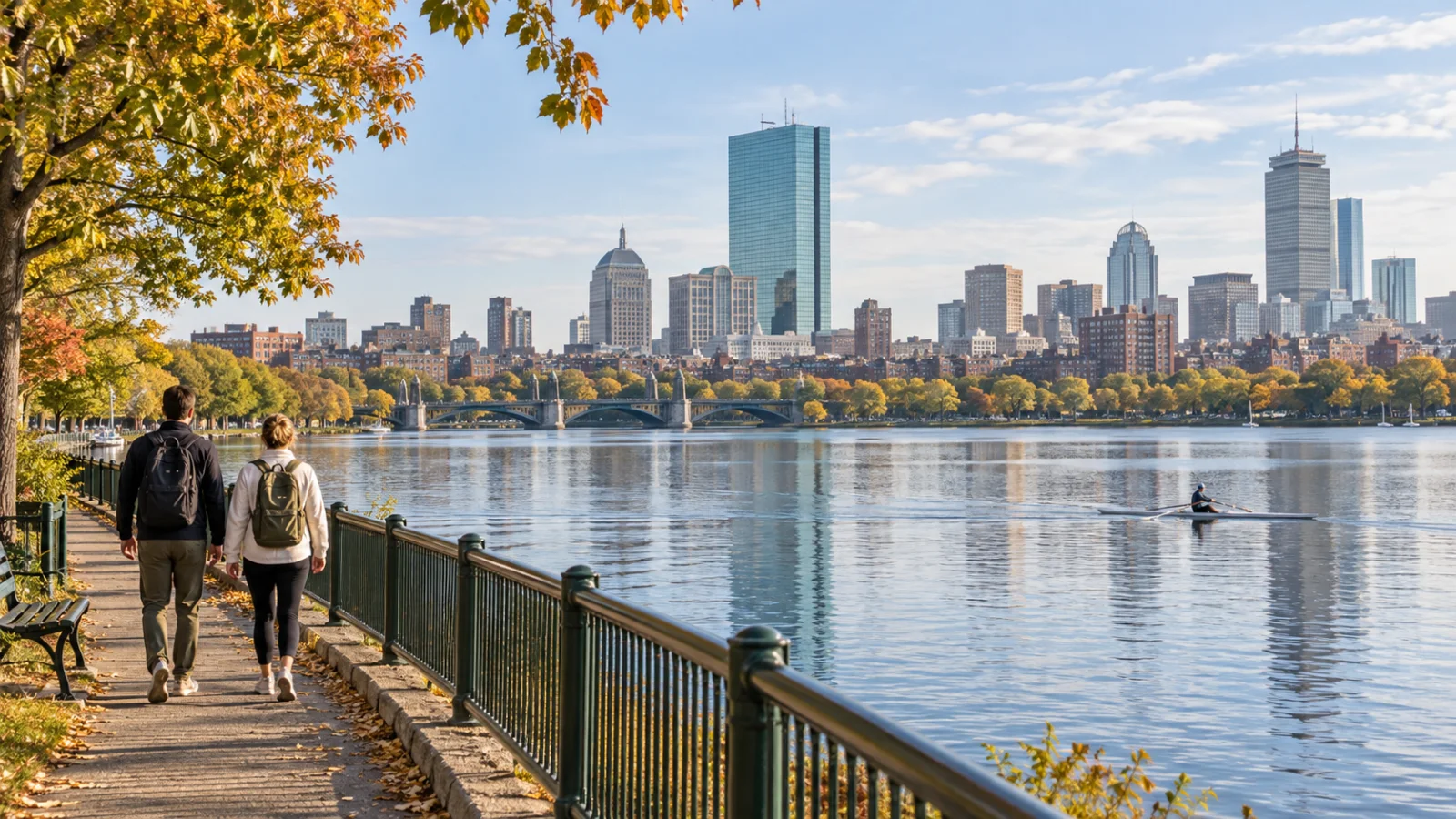
Boston earns 93/100 for a three-day first trip. It is compact, legible and unusually rich in free outdoor history. The harbor, universities and serious museums add depth without requiring a car. The common mistake is not seeing too little; it is turning every Freedom Trail doorway into a timed visit, then adding an aquarium, museum and cruise because a pass includes them.
The three-day route
01
The Freedom Trail and North End
Start at Boston Common and follow the official red line through the downtown historic core. The route is linear rather than a loop, so plan the finish instead of assuming you will return to the same point. Choose two interiors that genuinely matter—perhaps the Old State House, Paul Revere House or USS Constitution Museum—and experience the rest through streets, burial grounds and exterior context.
Continue into the North End for a late lunch or early dinner. If you complete the trail in Charlestown, use a ferry or transit connection back when operating rather than retracing every step. Do not add the Aquarium simply because it is nearby on a map; save that capacity-limited visit for the weather branch.
02
Back Bay, one art museum and the Charles
Walk Copley Square, Commonwealth Avenue and the Public Garden before choosing one museum direction. The Museum of Fine Arts has encyclopedic scale; the Isabella Stewart Gardner Museum offers a more singular experience and timed-entry rhythm. Treat either as the paid anchor, not the opening act for the other.
Use good weather for the Esplanade and Charles River edge. Fenway can supply lunch, architecture or an evening game, but stadium plans control the schedule. In poor weather, extend the museum and keep dinner near Back Bay rather than forcing the river walk.
03
Harbor and Cambridge—or the indoor branch
On a clear, settled day, take a sightseeing cruise early enough that wind or operational changes do not strand the whole plan. Follow with the Harborwalk or a simple Cambridge afternoon around Harvard Square. These are two distinct Boston perspectives connected by transit, not six separate sights.
In cold rain or poor visibility, make the New England Aquarium or Museum of Science the main event. Add only one compact neighborhood afterward. The weather branch should preserve the character of the day, not become a frantic attempt to redeem a prepaid ticket.
Choose the right third day
Harbor cruise + Cambridge
Choose this for the skyline, islands and a university neighborhood. Reserve the cruise, check the operating season and leave a buffer before the next fixed plan.
Aquarium or Museum of Science
Choose one major indoor anchor. The Aquarium matters to CityPASS math; the Museum of Science appears in both CityPASS and Go City.
Attraction-pass decision
Start with the Aquarium, not the discount percentage.
Boston CityPASS currently covers four attractions from a seven-option list across nine days and includes the New England Aquarium. Go City offers choice-based Explorer and consecutive-day All-Inclusive products, but not the Aquarium. Because the Freedom Trail and many neighborhood experiences are free, a pass should fit the paid anchors already chosen.
We may earn a commission if you buy through the Go City link. Your price does not increase, and affiliate payout does not affect the verdict.
Why Boston lost 7 points
Where to stay for this route
Back Bay
Strong transit, restaurants and evening walks, with easy access to the Public Garden and museums. Rates rise sharply on major dates.
Compare Back Bay staysDowntown / Beacon Hill
Walk quickly into the Freedom Trail, Common and waterfront. Exact blocks vary in late-night atmosphere and hotel style.
Compare Beacon Hill staysNorth Station area
Useful for historic sights, the North End and rail trips north. Back Bay and Fenway plans need an extra ride.
Compare North Station staysHotel map
Loading live accommodation options…
What three days really cost
For two people sharing a room, budget roughly $220 to $430 per person per day before flights. Boston’s free historic core keeps attraction costs controllable; hotel rates and a cruise, Aquarium or stadium ticket create the larger swings.
| Category | Thoughtful | Comfortable |
|---|---|---|
| Shared room | $110–$180 pp | $190–$290 pp |
| Food and coffee | $50–$80 | $90–$140 |
| Transit and entries | $25–$65 | $65–$115 |
False economy: staying far outside the walkable core can turn a compact trip into repeated commuter journeys. Compare the hotel door to Boston Common, not just the station name.
Three habits that make Boston better
Read the trail; do not collect it
The street sequence is the experience. A guided walk or two chosen interiors gives more context than buying admission everywhere.
Let the harbor remain weather-dependent
Reserve when needed, but keep the surrounding day flexible and check operating notices. A gray, windy cruise is not automatically better because it was prepaid.
Use the T for district changes
Walk within the historic core and Back Bay; tap into transit when the itinerary moves to Cambridge, Fenway or the Science Park. Check live MBTA service before relying on a specific connection.
Useful booking shortcuts
Book one weather-sensitive anchor.
Boston stays
Compare the room against historic, museum and harbor starts.
Compare staysGo City Boston
Compare Explorer and All-Inclusive against the non-Aquarium list.
Check live optionsBoston activities
Compare history, food and harbor experiences after choosing the route.
Browse activitiesWe may earn a commission when you book through these links. Your price stays the same.
Boston first-trip questions
Is three days enough?
Yes for the historic core, Back Bay and one harbor, science or Cambridge day. Choose only two deeper Freedom Trail interiors.
Where should I stay?
Back Bay is the strongest all-round base. Downtown or Beacon Hill favors history; North Station favors the North End and northern rail trips.
Do I need a car?
No. Walking and public transit cover this route better than driving, and central parking is expensive.
Is a Boston pass worth it?
Possibly. Start with whether the Aquarium belongs, then total the exact paid anchors. Do not let a bundle displace Boston’s free history and neighborhoods.
Details checked October 11, 2026. Current structures were checked with the Freedom Trail Foundation, Boston CityPASS, Go City Boston and MBTA Charlie. Prices, schedules and reservations can change.