 Trip Well Spent
The short verdict
Rome earns 92/100 for a three-day first trip. The city delivers ancient history, Renaissance art, piazza life and excellent meals inside a largely walkable core. It loses points when reservation scarcity makes the route brittle or when travelers compare a direct ticket with a pass-bundled guided product as though they were identical.
The three-day route
01
The Colosseum, Forum and Monti
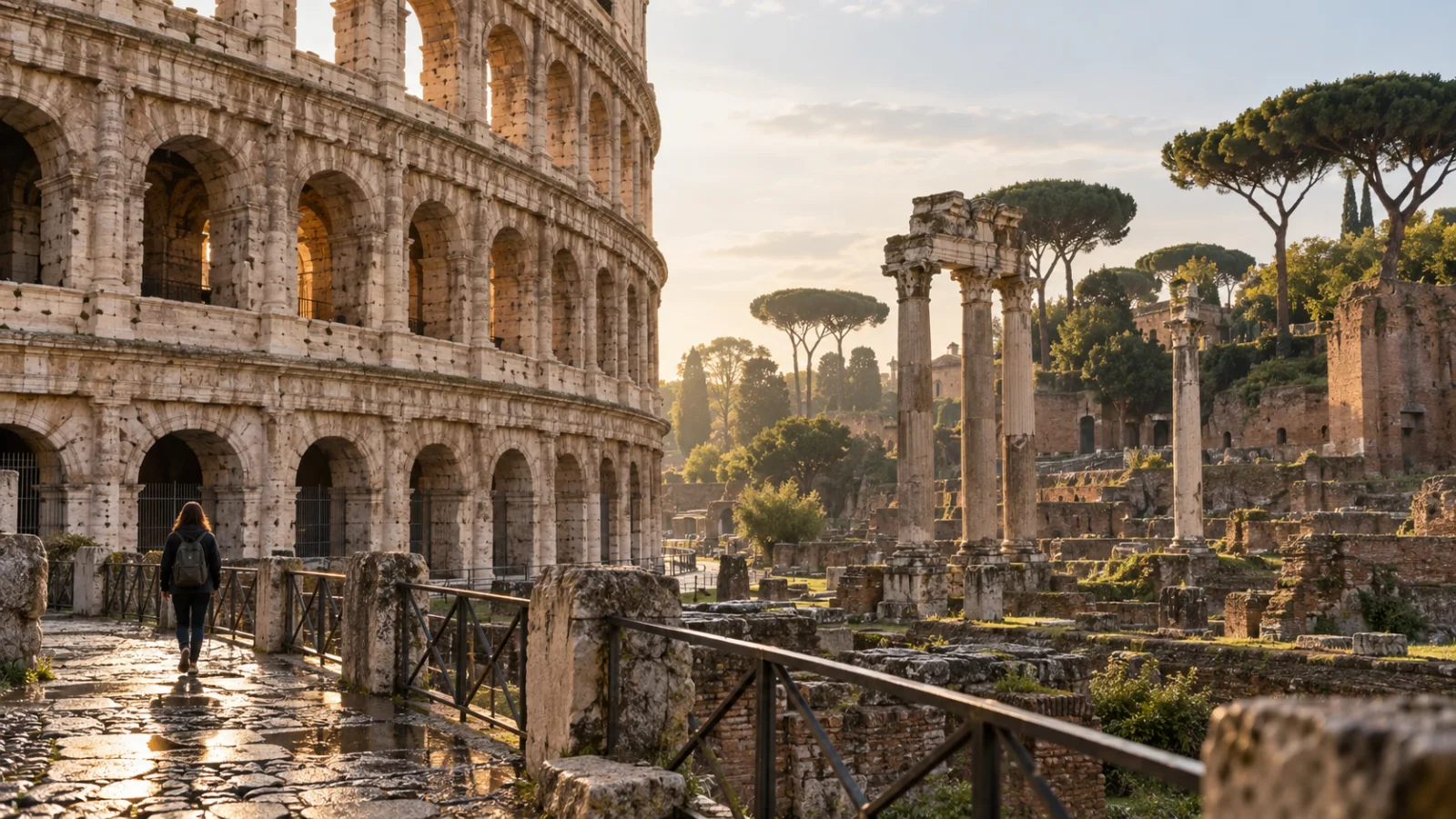
Use the official timed Colosseum reservation as the fixed point. The Colosseum, Roman Forum and Palatine are one archaeological complex, not three quick attractions. Give them the morning and early afternoon, carrying water and accepting that uneven surfaces slow the route.
Move into Monti for a late lunch, independent galleries and an unstructured evening. Do not add the Borghese Gallery or Capitoline Museums because the map shows open hours. Ancient Rome is physically and cognitively substantial enough for one day.
02
Borghese Gallery, Villa Borghese and Flaminio
Start with the Borghese Gallery at the reserved time and choose a limited collection plan. The timed visit rewards focus; it does not make a rushed room-by-room scan wise. Continue into Villa Borghese for gardens, paths and breathing room.
Recover over lunch near Flaminio, then walk toward Piazza del Popolo and the Spanish Steps. If the museum visit ran long, stop there. A long park afternoon is a feature of the route, not evidence that another ticket was missed.
03
The historic center, Tiber Island and Trastevere
Begin early at the Trevi Fountain and Spanish Steps before following streets toward Piazza Navona. Continue to Campo de’ Fiori as a geographic marker rather than an obligation to shop; the route stays entirely street-led and needs no timed interior.
Continue along the river and across Tiber Island into Trastevere. This is the day to sit, revisit a square after lunch and let evening arrive. Add a food tour only if it replaces dinner planning, not as another layer on top.
Book in the order that can break the trip
Colosseum first
Official time-slot sales currently open 30 days before the visit. Tickets are named, and current rules tightly limit later name changes. Use the official channel or understand exactly what a hosted product provides.
Borghese Gallery second
Reserve the gallery’s fixed two-hour session through its official channel. Inventory is limited, so confirm the visit before building the park day around it.
City-pass decision
Rome has three different product categories.
Go City Explorer bundles selected hosted entries, tours and experiences across 30 days. Roma Pass combines one or two participating Rome sites with local transport. Direct tickets often win when the route contains only the Colosseum and Borghese Gallery. Compare the exact version of each admission.
We may earn a commission if you buy through the Go City link. Your price does not increase, and affiliate payout does not affect the verdict.
Why Rome lost 8 points
Where to stay for this route
Monti
Walk to Ancient Rome, reach the Metro and return to useful restaurants. Avoid the busiest nightlife lanes if sleep matters.
Compare Monti staysCentro Storico
Excellent for piazzas and evening streets, but some addresses are awkward for Metro access and vehicle drop-off.
Compare historic-center staysFlaminio
Calmer streets and strong Villa Borghese access. Ancient Rome and late Trastevere evenings need longer returns.
Compare Flaminio staysHotel map
Loading live accommodation options…
What three days really cost
For two people sharing a room, budget roughly €175 to €360 per person per day before flights or rail. Official base tickets can be reasonable; central lodging, hosted tours and high-season dining create the bigger swing.
| Category | Thoughtful | Comfortable |
|---|---|---|
| Shared room | €80–€140 pp | €155–€245 pp |
| Food and coffee | €45–€70 | €80–€125 |
| Transit and entries | €25–€55 | €60–€100 |
False economy: buying an expensive hosted ticket because the official channel looks sold out can cost more than changing the visit time or day. Compare the actual included service.
Three habits that make Rome better
Carry reservation proof and identification
Named tickets and current access rules make correct visitor details important. Keep the official confirmation available offline.
Walk early, recover midday
Stone surfaces and heat make the same distance harder than it looks. Put exposed archaeology early and protect a long lunch.
Use transport as support
The Metro helps with Monti, Prati and station moves, but the historic center remains largely a walking city. Do not build a minute-tight day around a perfect bus connection.
Useful booking shortcuts
Book the official anchors before the bundle.
Rome stays
Compare Monti, the historic center and Flaminio against the two reserved mornings.
Compare staysGo City Rome
Compare Explorer choices with the exact hosted or guided product supplied.
Check live optionsRome activities
Compare archaeology and food tours only after the two museum reservations are fixed.
Browse activitiesWe may earn a commission when you book through these links. Your price stays the same.
Rome first-trip questions
Is three days enough?
Yes for Ancient Rome, the Borghese Gallery and a historic-center day. No for those plus several museums and a day trip.
Where should I stay?
Monti is the strongest all-round base. Centro Storico favors walking; Flaminio favors Villa Borghese access and quieter evenings.
Do I need a car?
No. Walk the center and use Metro, bus, tram or taxi support. Restricted zones and parking make driving unnecessary.
Which Rome pass is best?
It depends on whether you need municipal sites plus transit, selected hosted experiences or just two direct tickets. Compare the exact reservation product first.
Details checked October 11, 2026. Current details were checked with the official Colosseum park, official Borghese Gallery, Go City Rome, Roma Pass. Prices and reservations can change.