 Trip Well Spent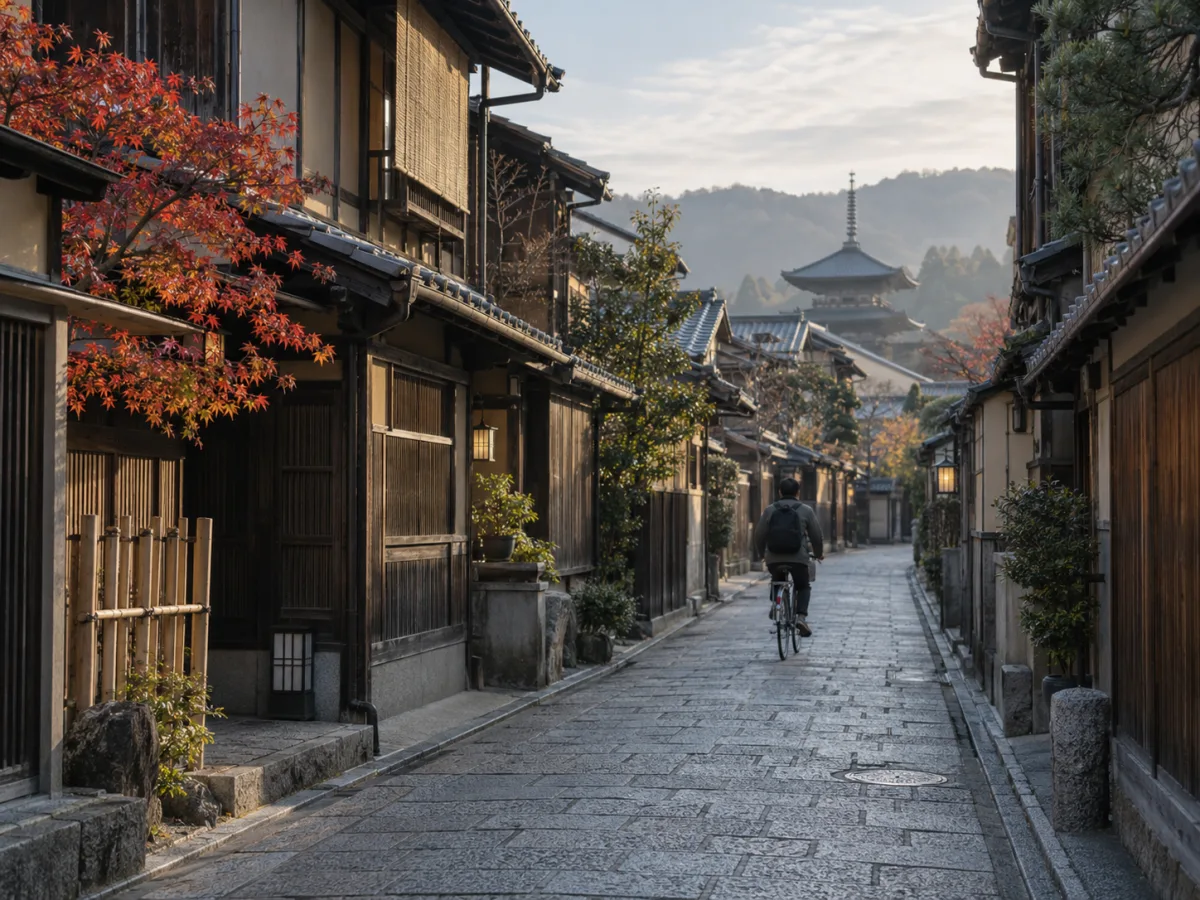
The direct answer
Make Kiyomizu-dera your first dawn, unless Fushimi Inari is the reason you came.
Kiyomizu-dera’s 6:00 opening creates a complete early route: temple first, then Sannenzaka and Ninenzaka before their daytime crush, followed by Yasaka and Gion as the city wakes. Fushimi Inari is the more flexible answer because the shrine grounds are always accessible; Arashiyama is best when bamboo and riverside light matter more than open interiors.
The alarm-clock picker
What should the early start buy you?
Kiyomizu at dawn
The best first-timer morning: a true 6:00 opening, quiet approach lanes and a natural downhill finish through Higashiyama.
Compare stays near HigashiyamaWhy the strategy earns 94/100
The three mornings worth setting an alarm for
Morning 01 · Best first answer
Kiyomizu-dera to Gion, downhill
Morning 02 · Most flexible
Fushimi Inari, beyond the first torii tunnel
Morning 03 · Image-first
Arashiyama before the district opens
The one-alarm rule
On a five-day first trip, schedule one truly early morning and one optional second start. Keep the following afternoon light. The goal is to experience a different Kyoto, not to prove that sleep is for weaker travelers.
The humane timing system
| Window | Use it for | Do not use it for |
|---|---|---|
| Before 7 | ● One outdoor or early-opening anchor | Cross-city collecting |
| 7–9 | Connected lanes, parks, breakfast | Waiting outside a later-opening sight |
| 9–12 | One reserved interior nearby | Joining the bus crush if rail works |
| 12–3 | ● Lunch, garden, hotel pause | Three more headline temples |
| Evening | Neighborhood walk and dinner | Scheduling the next alarm by guilt |
Do not become the crowd you woke early to avoid
Keep voices down, do not block lanes or private entrances, avoid tripods on narrow streets, follow photography restrictions, and carry luggage in a way that does not strike historic surfaces. Kyoto City explicitly asks visitors to be considerate in Kiyomizu, Arashiyama and Gion.
Sleep where the alarm is believable
Downtown Kyoto
Strong evening life and useful rail access; the best compromise when only one morning starts early.
Compare downtown staysGion / Higashiyama
Walk into the dawn route, then enjoy the district again after day visitors leave.
Compare Gion staysKyoto Station
Direct JR Nara Line logic and the least complicated start if luggage or day trips already favor the station.
Compare station staysKyoto early-morning questions
Is Kyoto really quiet before 8 a.m.?
Quieter, not empty. Famous outdoor places can already have photographers and tour groups. The official city benchmark treats before 9:00 as morning sightseeing.
Which early route is easiest from Kyoto Station?
Fushimi Inari via the JR Nara Line. Kyoto City’s transport guidance recommends rail and notes the short trip to JR Inari.
Can I do Kiyomizu and Fushimi before breakfast?
You can, but it weakens the strategy. One calm district plus breakfast usually produces a better day than two headline sites connected by a race.
What if I am not an early riser?
Use evening hours, quieter outer districts or one later-opening garden at its first entry. The best crowd strategy is the one your group can repeat without resentment.
Protect the rest of the day: use the Kyoto beyond temples plan to follow an early sacred-site anchor with craft, food, manga or river time nearby.
Research note: The routes were checked against current search leaders and Kyoto City’s official morning, Higashiyama and transport guidance. Opening times, special admissions and train service change; verify each operator for your date.