 Trip Well Spent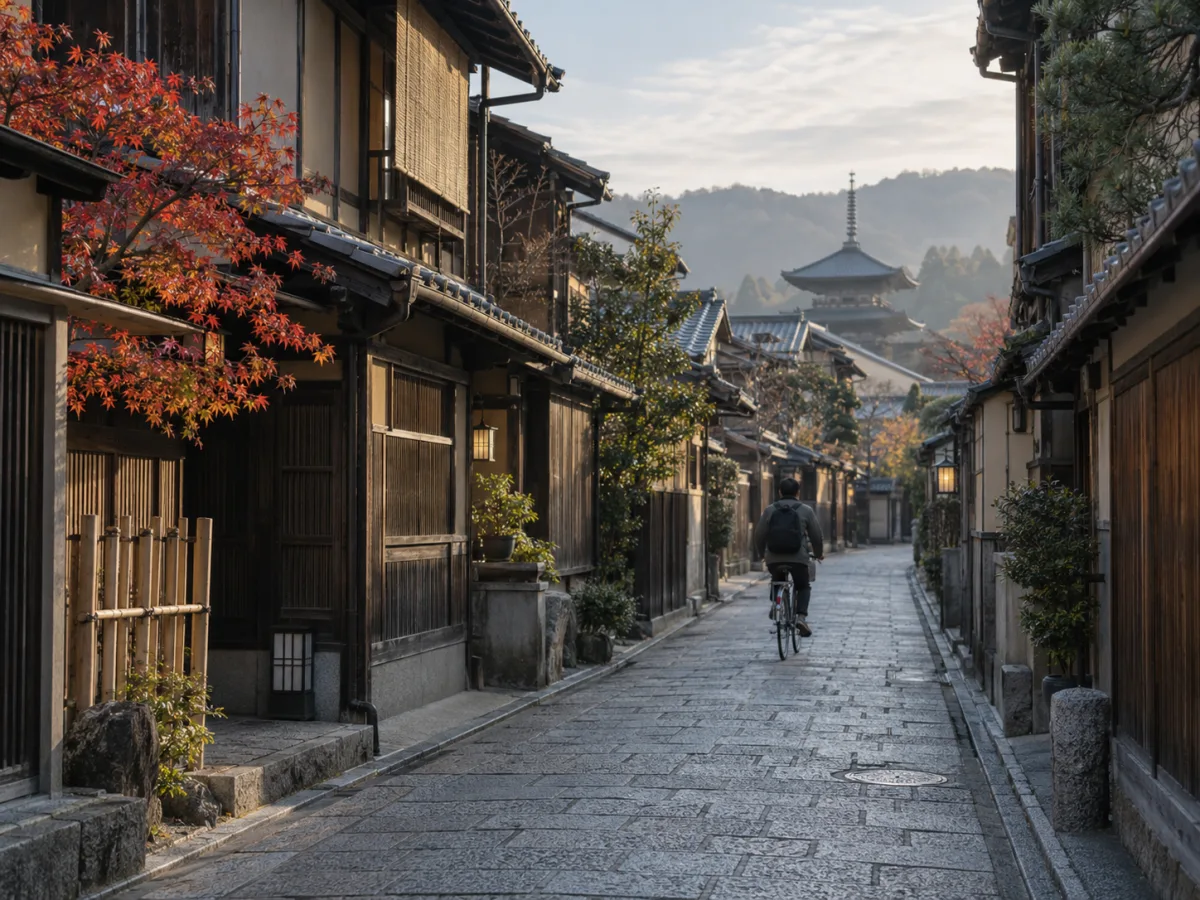
The direct answer
Alternate every temple morning with a different kind of afternoon.
Use Kiyomizu-dera, Fushimi Inari and one garden or temple of personal interest as the only sacred anchors in a five-day trip. Build the rest around Nishiki and downtown food, the Kyoto Museum of Crafts and Design, the International Manga Museum, the Railway Museum, Fushimi sake, a Kamo River evening and one bookable hands-on experience.
Many pages ranking for this question offer good ideas but leave the traveler to assemble them across a large city. Kyoto is not difficult because it lacks options. It is difficult because buses, opening hours and diagonal transfers punish a random list. This plan groups the non-temple experiences by geography and uses the famous sacred sites as early anchors, not as an all-day endurance test.
Trip Well Spent culture-mix grade
A richer five days with less repetition.
Choose the non-temple thread
What do you want Kyoto to teach you?
Craft and design
Use the Museum of Crafts and Design as the context setter, then book one workshop with enough time to understand the process instead of shopping from five unrelated stores.
Compare nearby staysThe five-day Kyoto culture mix
The days are modules, not commandments. Move them for closures and weather, but preserve the geography. The goal is to spend time inside a district rather than proving you can cross Kyoto repeatedly.
Higashiyama + downtown
One temple morning, then let the living city take over.
Begin at Kiyomizu-dera when it opens, before tour groups fill the approaches. Walk Sannenzaka and Ninenzaka once, then continue toward Gion rather than collecting more temple admissions. By lunch, shift the trip into the present: ceramics, small galleries, food and the Kamo River.
Okazaki
Learn the craft vocabulary before you buy the souvenir.
Kyoto’s craft traditions are easier to appreciate when you can distinguish materials and processes. Start at the Kyoto Museum of Crafts and Design, then choose one nearby museum, exhibition or prebooked workshop. Do not turn the day into a retail scavenger hunt.
Fushimi
Use the shrine early, then stay for the district.
Fushimi Inari is accessible around the clock, so visit early and leave before the lower route reaches peak pressure. Then remain in southern Kyoto for sake history, canals and lunch instead of commuting to Arashiyama because both names appear on a checklist.
Alternative: choose Uji for tea culture when tea matters more than sake. Do not squeeze both into the same day just because they share a southern train line.
Central Kyoto
Manga, food culture and an evening that belongs to residents.
The International Manga Museum gives the day a substantial indoor anchor, but the larger point is to spend time in central Kyoto without using it merely as the road between temples. Combine the museum with Karasuma Oike, Nishiki and a downtown evening.
Umekoji + your final choice
Give the last day a subject, not leftovers.
The Kyoto Railway Museum tells a major part of Japan’s industrial and design story, and its scale makes it more than a family fallback. Pair it with Umekoji Park and the Kyoto Station area, or replace the module with one garden, castle or workshop you still care about.
The one-for-one rule
After every temple or shrine anchor, choose a different cultural mode: making, eating, reading, listening, walking by water or learning how the city works. Variety is not a retreat from Kyoto’s heritage. It is a better way to understand it.
What to book, and what to leave flexible
| Experience | Book ahead? | What to verify |
|---|---|---|
| Small craft workshop | Yes | Working time, language support, cancellation and whether the maker teaches |
| Cooking or tea experience | Usually | Dietary fit, group size, location and actual hands-on time |
| Sake visit or tasting | Often | Age rules, language, production access and responsible return transport |
| Major museums | Check first | Weekly closure, special exhibition ticket and last entry |
| Kiyomizu-dera or Fushimi Inari | No standard reservation | Official hours, access notices and respectful behavior |
Avoid booking one timed experience in each corner of the city. A paid activity should simplify the day by becoming its anchor. If it forces two difficult transfers, it needs to be exceptional.
Three common planning mistakes
- Replacing temples with an equally random list: twelve non-temple pins still create a fragmented trip.
- Assuming “traditional” means hands-on: read what the workshop includes, who teaches it and how much time is spent making.
- Ignoring weekly closures: museums and cultural facilities do not share one universal closed day. Build modules that can swap.
- Putting Nishiki at lunch peak: a famous market is still a working lane. Go with purpose and follow posted eating etiquette.
- Commuting away every evening: where you stay decides whether dinner feels spontaneous or like another transit task.
Where to stay for this version of Kyoto
Downtown remains the best all-round base because it protects evenings and connects to multiple rail and subway corridors. Kyoto Station is useful when Umekoji, Fushimi, Uji or day trips dominate. Okazaki is the calm culture-first choice for travelers who accept fewer late-night options.
Downtown Kyoto
Choose the Shijo-Karasuma to Kawaramachi corridor for food, evening life and several useful transport lines.
Compare downtown staysKyoto Station
Practical for Fushimi, Uji, Umekoji and luggage days. The tradeoff is commuting to many of Kyoto’s best evenings.
Compare station staysOkazaki
Good access to museums, the canal and eastern districts, with a quieter night than central Kawaramachi.
Compare Okazaki staysUse the complete Kyoto stay guide before booking, and read why Kyoto Station is not downtown if a station hotel looks automatically convenient.
Frequently asked questions
Can I enjoy Kyoto if I am not interested in temples?
Yes. Kyoto’s craft, food, performance, museum, manga, railway, tea and sake cultures can support a full trip. Keep one or two sacred sites for context, then choose experiences that match your actual interests.
How many temples should I see in five days?
There is no required number. Two or three carefully chosen anchors are enough for many first trips. Choose them for different reasons, such as architecture, landscape or personal significance, rather than fame alone.
What is the best non-temple thing to do in Kyoto?
A well-run craft workshop offers the strongest Kyoto-specific experience for many travelers because it connects technique, material and local history. The best choice still depends on whether you care more about craft, food, modern culture or transport.
Where should I stay for culture and nightlife?
Downtown Kyoto around Shijo-Karasuma, Kawaramachi or Karasuma Oike gives the best balance. It supports dinner and evening walks while preserving multiple transport options for daytime districts.