 Trip Well Spent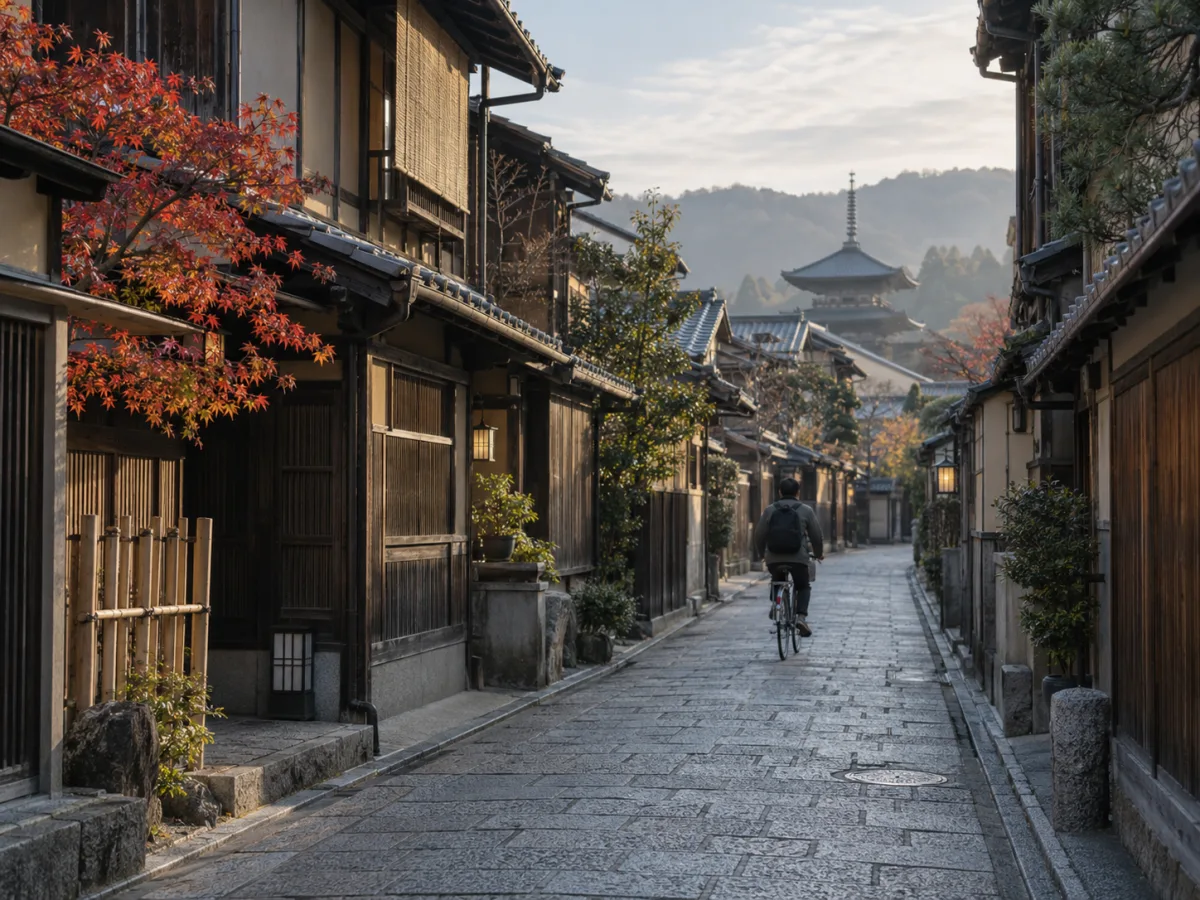
The direct answer
Hold five refundable nights across the usual late-March to early-April planning window, then let the official in-season updates choose each day.
Do not build the trip around one famous tree or an exact peak claim published months too early. Kyoto's blossoms move across elevation, variety and neighborhood. A resilient trip uses one early bloom anchor each morning, continues geographically instead of crossing the city, and keeps later-blooming or northern options available when central Kyoto is early or past peak.
Search results for Kyoto cherry blossoms often reward certainty. Some already publish precise 2027 dates even though the weather that controls bloom development has not happened. The useful answer is operational certainty instead: where to sleep, how many nights to hold, which routes tolerate a timing miss and how to respond when the official bloom calendar begins updating in season.
Trip Well Spent plan grade
Five nights turn forecast uncertainty into options.
Choose your booking posture
How fixed are your dates?
Hold five refundable nights downtown
Use the broad late-March to early-April planning window, then refine only when credible in-season information arrives. Downtown keeps multiple directions open.
Compare flexible Kyoto staysA five-day route that can move with the flowers
The order below is not sacred. Its value is modularity. Keep the geographic day shapes, then assign the best current bloom area to the best weather morning. If Higashiyama looks strong, run that module first. If it is early, favor gardens, canals and early varieties rather than racing between bare famous trees.
Day 1 · eastern Kyoto
Southern Higashiyama before breakfast, then stop chasing quiet
Switch: if central bloom is weak, keep the dawn walk for atmosphere and use the afternoon for the craft and culture route.
Day 2 · northwest Kyoto
Arashiyama as a district, not one crowded path
Bloom role: Arashiyama adds a western option when eastern Kyoto is overloaded, but it is not an uncrowded secret during blossom season.
Day 3 · northern and central options
Use latitude and variety as insurance
Planning rule: a later-bloom option is insurance, not a promise. Confirm the current year before traveling.
Day 4 · southern Kyoto
Fushimi early, then sake streets or Uji
Switch: use this day during a wet or uncertain central bloom period because the cultural route remains worthwhile without flowers.
Day 5 · the weather reserve
Return to the best stage, not the biggest name
Why it works: a reserve day absorbs rain, mistimed bloom and the ordinary human need to rest.
Build for three bloom states
Lean into gardens and culture
Find early varieties only through current reports. Use planned craft, food and museum stops so the trip never depends on a single flowering date.
Protect dawn, release midday
Win one famous place early. After breakfast, stay geographic and accept people rather than traveling all day to avoid them.
Follow water and later varieties
Canals, rivers and petal-covered paths can be beautiful after peak. Check northern or later-bloom areas before abandoning the plan.
Keep the room in the trip
Wait for a useful weather break and choose one nearby outdoor anchor. Kyoto offers enough indoor depth to stop forcing wet photographs.
The blossom rule
Do not cross Kyoto for a tree someone photographed yesterday. Choose one area using the newest credible report, arrive early, then let that district become the day.
Where to stay for blossom flexibility
The best blossom base is not necessarily beside the most famous grove. It gives you several viable directions, an easy dinner after an early start and enough transport options to change course when the live report does.
Downtown / Karasuma Oike
Balanced for eastern, western and southern routes, with useful evenings and multiple transport choices. Verify the exact walk to rail and subway.
Compare downtown staysSouthern Higashiyama
Excellent for an early Kiyomizu start and atmospheric lanes. Expect intense daytime foot traffic and a less balanced position for western days.
Compare Higashiyama staysKyoto Station
Useful for Uji, Nara and intercity arrivals, but weaker for spontaneous central evenings. Count door-to-sight time, not just train time.
Compare station staysIf you are choosing between the station and downtown, our Kyoto geography guide counts rail mornings and free evenings. If the trip extends beyond blossoms, the five-day Kyoto itinerary supplies the broader structure.
Booking sequence for 2027
- Hold a refundable room. Choose five nights or more if blossom timing is a major goal. Avoid a nonrefundable premium based on an unofficial exact forecast.
- Watch official information closer to travel. Kyoto's official seasonal pages publish in-season observations and current illumination news.
- Reserve only the truly fixed experiences. Keep blossom mornings movable where possible.
- Assign modules two or three days out. Use weather, bloom state, transport and your energy together.
- Recheck the night before. Conditions, special openings and crowd controls can change.
Changing hotels inside Kyoto rarely improves a five-night blossom trip. Every move costs a morning, creates luggage friction and narrows the flexibility you paid to preserve. One balanced base plus early trains is usually the better bargain. If two bases are unavoidable, divide Kyoto from another city, not one Kyoto neighborhood from another.
Frequently asked questions
When will cherry blossoms peak in Kyoto in 2027?
There is no credible exact peak date this far ahead. Use the usual late-March to early-April planning window only as a booking range, not a forecast. Weather and variety affect each area differently, and official observations become useful much closer to travel.
How many nights do I need in Kyoto for cherry blossoms?
Five nights is a strong minimum when bloom is a major reason for traveling. It gives you several mornings, one weather reserve and room for Kyoto's culture beyond the blossoms. Three nights can work, but leaves much less protection from rain or mistimed bloom.
Should I stay in Gion for cherry blossom season?
Stay in southern Higashiyama when dawn access is the priority and you accept busy streets later. Downtown or Karasuma Oike is the more balanced default for multiple directions, transport choices and easy evenings.
Are nighttime illuminations guaranteed in 2027?
No. Programs, dates, hours and admission rules are announced by individual sites and official tourism sources. Treat illumination as an optional current-year layer, not a fixed part of an itinerary booked months ahead.